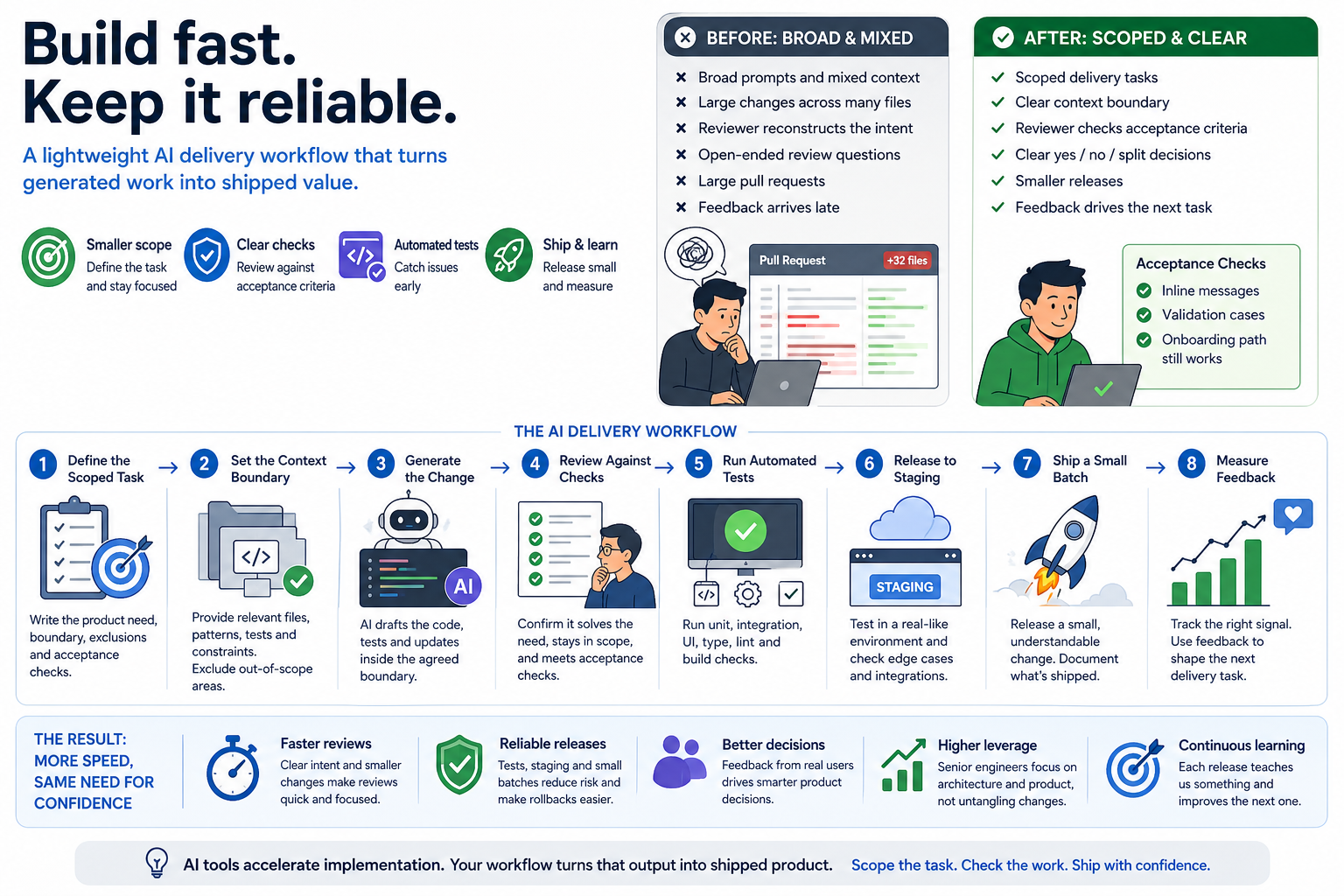
A Lightweight AI Delivery Path For Small Teams Shipping Real Product
AI A Lightweight AI Delivery Path For Small Teams Shipping Real Product Adam Sinnott 28 April, 2026 AI coding...


Adam Sinnott
15 April, 2026
Software development is getting faster. Today, with LLM‑powered agentic workflows, small software engineering studios can out deliver and out compete larger companies to build production‑ready features quickly and reliably; without bloated headcounts or runaway budgets.
At App Creators, we’ve embraced a human‑directed agentic pipeline that turns ideas into tickets, transforms tickets into rich context, and translates that context into verified code. This article explains how we work and why small studios should consider similar approaches.
Speed is no longer the constraint in software development, clarity is. When ideas are structured, validated, and guided by humans, AI becomes a force multiplier rather than a source of chaos.
Traditional development starts with a specification, followed by weeks of coding, manual reviews and testing. Agentic workflows invert this: they treat the pull request as the primary artifact and use AI agents to handle repetitive tasks, leaving humans to make architectural decisions and provide sign‑off. Our pipeline has four phases:
Automating the outer loop of development—planning, context gathering, and preliminary review—enables small teams to move faster. Atlassian’s experiment with ML‑filtered review comments improved code resolution rates and reduced ticket cycle times by roughly 30% . By delegating routine checks to AI, our engineers focus on high‑impact tasks like architecture and user experience.
Studies show that retrieval‑augmented agents catch issues that humans overlook. At Faire, their in‑house agent Fairey uses RAG to gather code context and test fixtures, then employs a second model to evaluate its own comments . This self‑evaluation reduces hallucinations and noise. Similarly, App.build’s dual‑agent architecture uses a critic agent to run compilation and tests, ensuring that code changes meet standards before they reach reviewers . We mirror these patterns by running tests and security scans automatically, preventing regressions without manual effort.
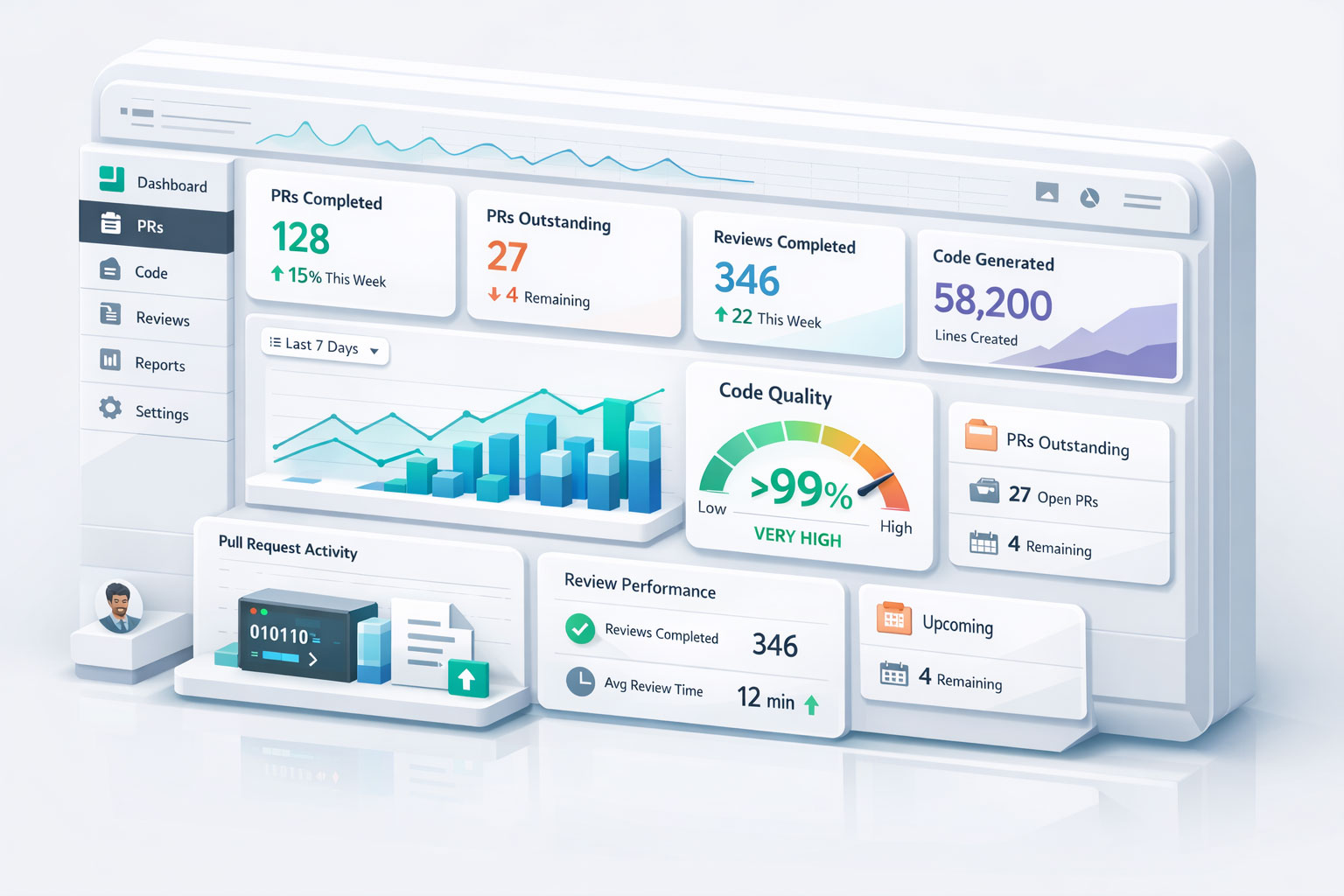
When AI handles repetitive review tasks, studios can operate with leaner teams. Datadog’s BewAIre system processes every PR to detect malicious code and achieves >99% accuracy with minimal false positives using chunking and curated datasets —a task that would require full‑time security specialists. GitLab’s Duo Agent Platform runs code reviews automatically for every merge request, leveraging pipeline data and security scans to provide structured feedback . These examples show that well‑designed agents can replace large amounts of manual checking, freeing developers to build features.
A human‑directed agentic workflow allows continuous alignment between customer requirements and code. Tools like Cursor and Sweep emphasise planning modes where the agent asks clarifying questions and stores plans in .cursor/plans/ or interacts via chat . By prompting the agent with the customer’s intent and verifying the output against automated tests and documented guidelines, we ensure the final PR matches the customer’s expectations. If something is off, the human reviewer can reject the PR and iterate with the agent, dramatically shortening feedback loops.
Based on industry case studies and our own experience, small studios should consider the following when adopting LLM‑assisted pipelines:
– Invest in context retrieval. Use semantic search to fetch relevant code, tests and documentation. Augment Code’s context engine and JetBrains’ CommitAtlas demonstrate that retrieving historical patterns and commit descriptions significantly improves coherence . Without proper retrieval, agents may hallucinate or miss dependencies.
– Encode guidelines in the repo. Create machine‑readable files that document coding standards, architectural constraints and security rules. Sweep’s SWEEP.md and Cursor’s .cursor/rules/ provide examples of how to codify tribal knowledge . These guidelines help the agent produce consistent code and reduce review churn.
– Use dual‑agent or critic loops. Separate generation and validation tasks. A critic agent can run tests, type checks or static analysis, providing feedback to the generation agent. App.build’s architecture shows this pattern clearly .
– Automate security and compliance scanning. Integrate automated scanners to catch vulnerabilities early. Datadog’s success in detecting malicious PRs via LLMs shows that automated security review scales better than manual inspection .
– Maintain human oversight. Agentic systems are powerful but not infallible. Always include a human review step to approve merges and refine prompts. GitLab emphasises least‑privilege instruction files and human approval to maintain trust .
Agentic workflows represent a paradigm shift for software development. They allow small studios to operate at a scale and quality once reserved for enterprises—generating tickets, enriching context, running automated tests and security scans, and surfacing only the most relevant feedback for human approval. By embracing these practices, AppCreators delivers faster, higher‑quality and more cost‑effective software, ensuring that clients receive exactly what they ask for. The future of development is human‑directed, AI‑assisted—and it’s available today for studios of any size.
AI A Lightweight AI Delivery Path For Small Teams Shipping Real Product Adam Sinnott 28 April, 2026 AI coding...
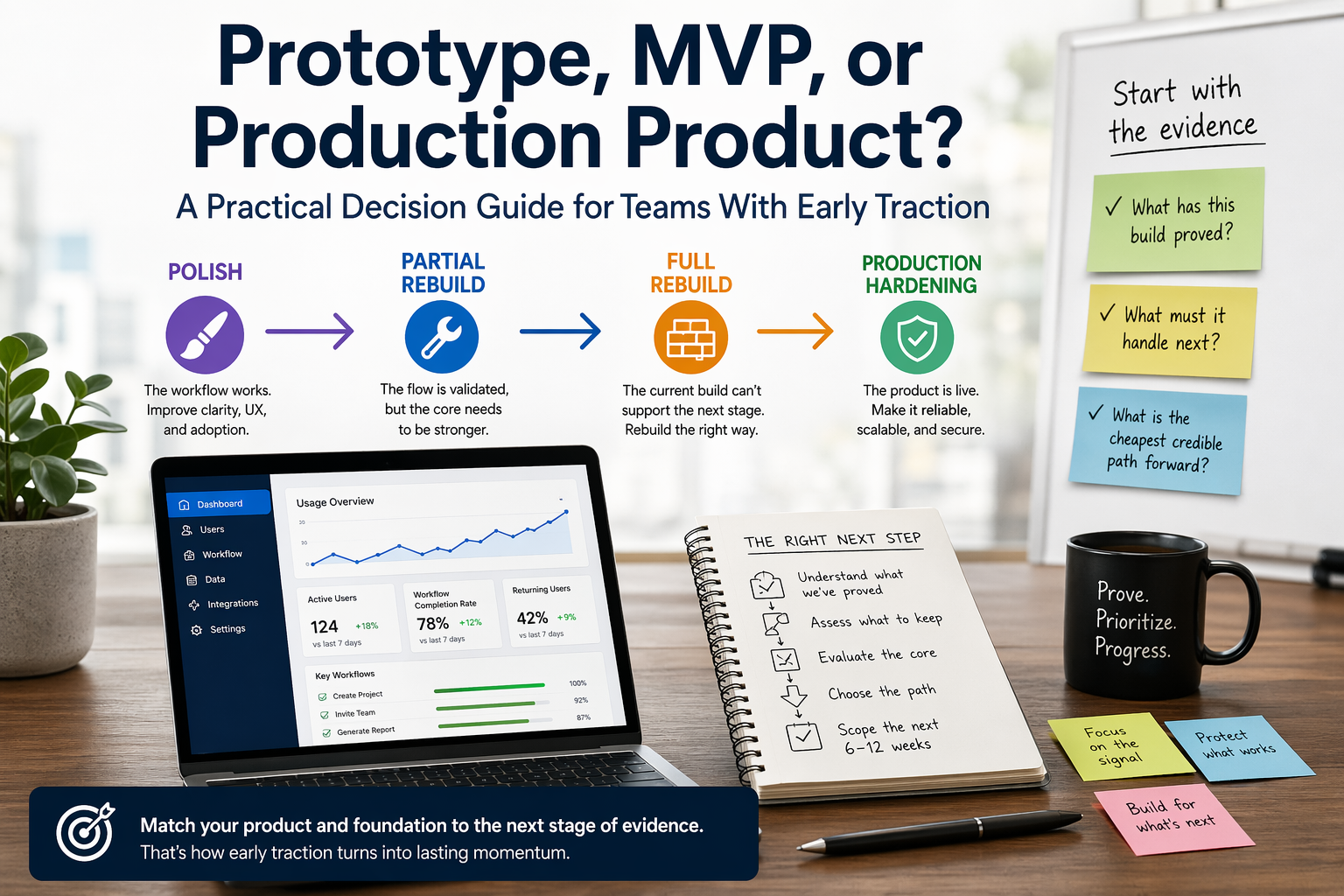
Uncategorized Prototype, MVP, or Production Product? A Practical Decision Guide for Teams With Early Traction Adam Sinnott 23 April,...
AI Small Studios, Big Capabilities: How Agentic Workflows Accelerate Software Delivery Adam Sinnott 15 April, 2026 Software development is...
Case Studies Smarter, Faster Information Retrieval: How AI-Powered RAG and CAG Can Streamline Your Business Tasks Adam Sinnott 28...
Droxford, Meon Valley, Hampshire
info@appcreators.co.uk
(+44) 01489 287009
AppCreators. All rights reserved.